Our colleague David Romero will spend a term in Glasgow

Uncategorized
Two weeks ago, our fellow colleague and Ph.D. student David Romero went on a short trip to A Coruña, Galicia. There, he was welcomed by University of A Coruña LBD (Laboratorio de Bases de Datos). During his stay, he had the opportunity to discuss the latest advances in high-variability systems with other researchers. David is now back with us at Seville for a short time, as he will soon embark on another trip, this time to Glasgow, Scotland, where he will spend a trimester progressing with his research work. From DiversoLab, we want to wish David the best during his next adventure. We are sure the experience will be rewarding!
Read More

Seminario “¿Cómo Funcionan los LLMs?”

Uncategorized
El pasado 4 de marzo, nuestro compañero Jesús Moreno León exploró el funcionamiento de los Modelos Extensos de Lenguaje (LLMs), ofreciendo una explicación accesible y sencilla sobre esta tecnología en un seminario al que asistieron alrededor de 40 personas, incluyendo docentes, investigadores, estudiantes de doctorado, de grado y de formación profesional. Durante la sesión, se explicó cómo los LLMs utilizan embeddings, representaciones numéricas de palabras, para captar significados y relaciones semánticas. A través de ejemplos prácticos, como la ubicación de palabras en un espacio vectorial, se mostró cómo estos modelos pueden entender y conectar conceptos de manera efectiva. Un aspecto crucial de los LLMs abordado durante el seminario fue el uso de mecanismos de atención, destacados en el influyente artículo Attention Is All You Need. Estos mecanismos permiten a los…
Read More

Diverso Lab is featured in latest Conectados podcast episode

Uncategorized
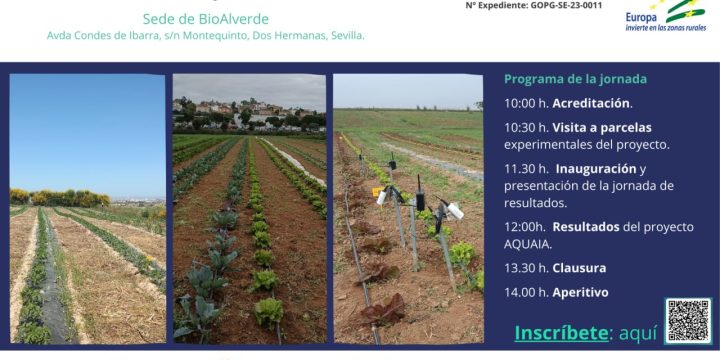
Two of our lab members, Professor David Benavides and Noelia López, along with Professor Alfonso Moriana from ETSIA joined the Conectados podcast of Canal Sur Radio in their latest episode to talk about our lab's work and one of our exciting ongoing projects: AquaIA! From software variability to cutting-edge configurable irrigation systems, they shared insights on how our research is shaping the future of software engineering. Conectados is a podcast from Canal Sur Radio where the focus is on current events in the world of Information and Communication Technologies, as well as presenting interesting technological projects made in Andalusia. The episode was released on February 26th and can be listened here: https://www.canalsur.es/radio/programas/conectados/podcast/16860414.html?video=2137236 You can find more information about AquaIA here.
Read More

Diverso Lab celebra el día de Andalucía apostando por más ciencia y tecnología para el bien común andaluz

Uncategorized
28 de febrero de 2025 - Día de Andalucía En Diverso Lab tenemos como lema "international computing" que pretende trasladar nuestra visión internacional y colaborativa de la ciencia y la innovación. Sin embargo, siempre tenemos presente que queremos trabajar por nuestra tierra y queremos progreso y bienestar para Andalucía.  Hoy, 28 de febrero, celebramos el Día de Andalucía con un firme compromiso hacia el progreso y la innovación local. Desde nuestro grupo de investigación en la Universidad de Sevilla, nos enorgullece contribuir al avance del conocimiento en el campo de la ingeniería de software y los sistemas informáticos, áreas fundamentales para el desarrollo tecnológico y económico de nuestra comunidad. En este día tan significativo, reafirmamos nuestro papel como agentes activos en la creación de soluciones digitales que mejoren la calidad…
Read More

New Universal Variability Language for Software, led by University of Seville researchers

Uncategorized
The project has been in development for more than 6 years in collaboration with different German and Austrian universities. University of Seville professor and Diverso Lab coordinator David Benavides has led a consortium that has been working since 2018 and has had meetings in France, Switzerland, Germany, Canada, Luxembourg or Austria, in the context of MODEVAR, to develop a common variability language. The language has been named UVL: Universal Variability Language and promises to be a milestone in the development of software product lines. UVL allows modeling variability in software systems, but its applications are beyond software. UVL assists in the production of highly configurable systems such as Android, Chrome or artificial intelligence systems. These models are used both academically and industrially for the study and production of highly configurable…
Read More

New seminar on how LLMs work

Uncategorized
On Tuesday 4th of March at 9:30AM, our team will hold a seminary titled "¿Cómo funcionan los LLMs? Una explicación simple y accesible", which will take place in classroom A2.11 at ETSII. The seminar wil be presented by our colleague Professor Jesús Moreno, and it will feature a simple and comprensible explanation on how large language models (LLMs) work, addressing key concepts with the help of practical examples to understand how these models are built and how they are used in current technological applications. The event is aimed at students, researchers and professionals who are interested in understanding the way AI assistants like ChatGPT, DeepSeek or Claude work. High-level concepts such as transformer architecture, self-supervised learning and reinforcement learning will be touched upon during the seminar, without getting into technicalities…
Read More

flamapy.ide has been presented at VaMoS25

Uncategorized
This week, the 19th International Working Conference on Variability Modelling of Software-Intensive Systems (VaMoS25) has taken place in Rennes, France, and one of our members had the opportunity to attend the conference and present a new paper. The paper, titled UVL web-based editing and analysis with flamapy.ide is authored by Francisco Sebastian Benitez, José A. Galindo, David Romero Organvídez and David Benavides, and presents flamapy.ide, a new web tool based on the flamapy ecosystem that allows users to create, modify, visualize and analyze feature models defined in UVL (Universal Variability Language). One of the key-defining features of flamapy.ide lies in its ability to perform feature model analysis operation directly on the user's browser, without the need for a backend server. Dr José A. Galindo participated in the conference and gave…
Read More

New seminar on Web Development using Webpack in the context of SPL

Uncategorized
On Tuesday 11th of February, our team will hold a seminary titled "Desarrollo web con Webpack y otras herramientas en un framework SPL", which will take place in classroom A2.11 at ETSII. The seminary will be presented by our colleague David Romero, and it will consist of a practical analysis of the integration of Webpack among other key tools related to Web Development within the context of Software Product Lines (SPL). It will use UVLHub, a repository for feature models defined in UVL as a case study. The event is aimed at students, researchers and software developers interested in modular architectures, workflow optimization with Webpack and best practices in SPL environments. Throughout the session, aspects such as advanced Webpack configuration, the use of complementary tools, and maintenance strategies in a…
Read More

Diverso Lab visits Aula del Futuro

Uncategorized
Today our group has had the opportunity to visit the Aula del Futuro, located in the Centro del Profesorado in Seville, and experience its innovations in education through an interactive process led by Mariano Real. Aula del Futuro is a project coordinated by the Instituto Nacional de Tecnologías Educativas y de Formación del Profesorado (INTEF) in collaboration with Spanish autonomous communities. Its aim is to present a more flexible learning space, in combination with technologies such as robotics, coding on Scratch or 3D-printing to improve teaching and learning processes through active methodologies. In this way, it presents a reconfigurable classroom space divided into six areas: Investiga (Research), Explora (Explore), Interactúa (Interact), Desarrolla (Develop), Crea (Create) and Presenta (Present). These spaces promote and stimulate the teaching and learning processes, making the…
Read More

New research published in the journal Engineering Applications of Artificial Intelligence

Uncategorized
An ontological knowledge-based method to enhance software product line engineering (SPLE) has been developed by Dr. Megha Bhushan and Dr José Ángel Galindo. Their work addresses feature model defects caused by dead features, significantly improving the quality of software products in SPLE. This research has been published in the prestigious journal Engineering Applications of Artificial Intelligence (Q1, Impact Factor: 7.5). This publication underscores our commitment to advancing the field of software engineering and contributes valuable insights for both academic researchers and industry practitioners. The full article is accessible here: https://www.sciencedirect.com/science/article/pii/S0952197624011588
Read More