Yesterday, April 29, 2026, our team from the University of Seville presented its work in the International Workshop on Languages for Modelling Variability (MODEVAR 2026).
The event, hosted online by TU Braunschweig (Germany), brought together international experts to discuss and advance the field of software variability representation.
Feature models have been recognized as one of the main contributions to the Software Product Line community since their invention in 1990. Despite several attempts to establish a standard modelling language (such as OVM, CVL, or TVL), reaching a consensus on a simple and universal feature modelling language remains a challenge.
With the goal of facilitating information sharing among researchers, tools, and developers, this year’s edition of MODEVAR focused on sharing knowledge about building variability representations and, most importantly, fostering open discussions on the collaborative development of UVL (Universal Variability Language).
Our contributions and presentations
Our group’s work had a significant impact during this interactive half-day event. The session began with an intervention by David Benavides, who opened the workshop by introducing attendees to the origins and goals of MODEVAR, as well as the fundamentals of UVL.
Subsequently, our researchers shared their latest advancements in a series of presentations that were well received by the community:
-
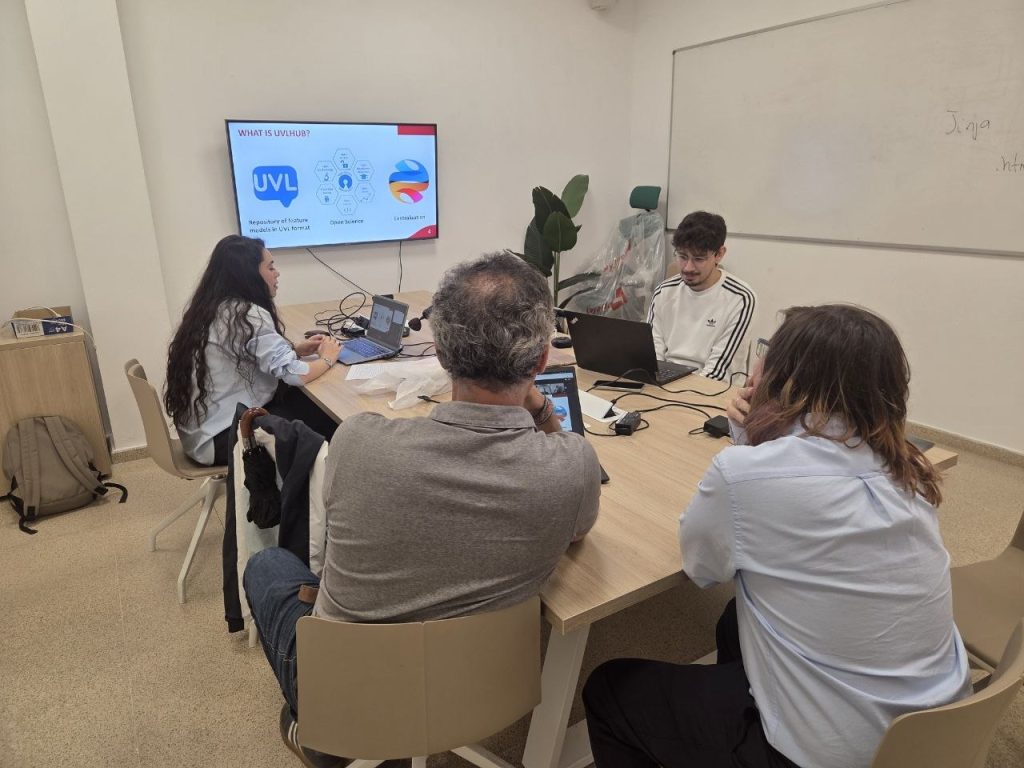
Esther Rocío Valladolid Ortíz presented “UVL and UVLHub: enhancements and new applications”, highlighting the latest improvements and new practical uses developed around the UVLHub repository and ecosystem.
-
Francisco Benítez broke down the future of client-side automated analysis with his talk, “FlamapyIDE 2.0: What’s Next for Client-Side AAFM”, presenting us with the new additions to the online tool.

-
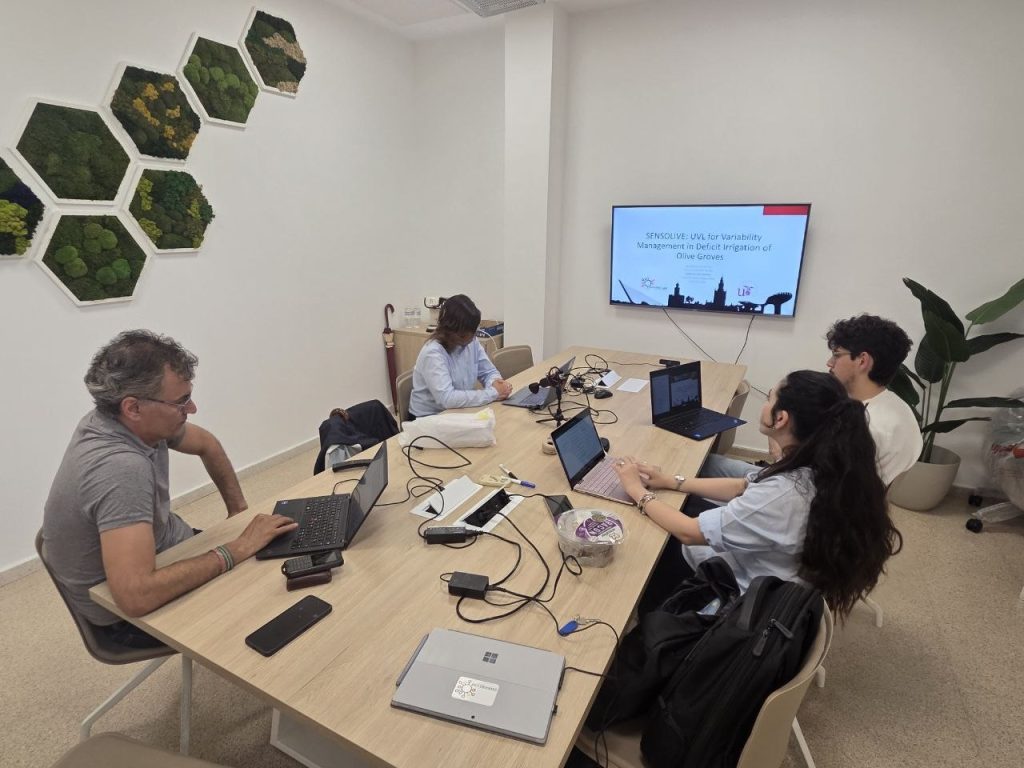
Guillermo Ciria González participated with a double intervention that demonstrated the immense versatility of UVL across very different domains. First, he discussed user experience design in his presentation “UVL-Based Prompt Variability for AI Agents in UX design processes”. Immediately after, he brought variability modelling to the agricultural sector with the presentation of the project “SENSOLIVE: UVL for Variability Management in Deficit Irrigation of Olive Groves”, this second presentation was made by Jose Manuel Sánchez Ruiz.
From our group, we would like to congratulate David, Esther, Francisco, and Guillermo for their excellent work and for continuing to position the University of Seville at the forefront of software variability modelling research.
The impact of UVL extends far beyond academic research. In fact, the language is already being utilized in industrial settings, demonstrating its practical value and reliability for real-world software development and product lines. Furthermore, its significant contribution to the community has already been recognized with an award, cementing its position as a leading variability modelling standard read more here: https://diversolab.us.es/2026/03/13/diverso-lab-researchers-receive-best-software-paper-award-2025/.
MODEVAR:
Tools and resources:
UVLhub: uvlhub.io
Flamapy: flamapy.org
Flamapy IDE: ide.flamapy.org
Presentations:
UVL and UVLHub: enhancements and new applications:
FlamapyIDE 2.0: What’s Next for Client-Side AAFM
UVL-Based Prompt Variability for AI Agents in UX design processes:
SENSOLIVE: UVL for Variability Management in Deficit Irrigation of Olive Groves: