
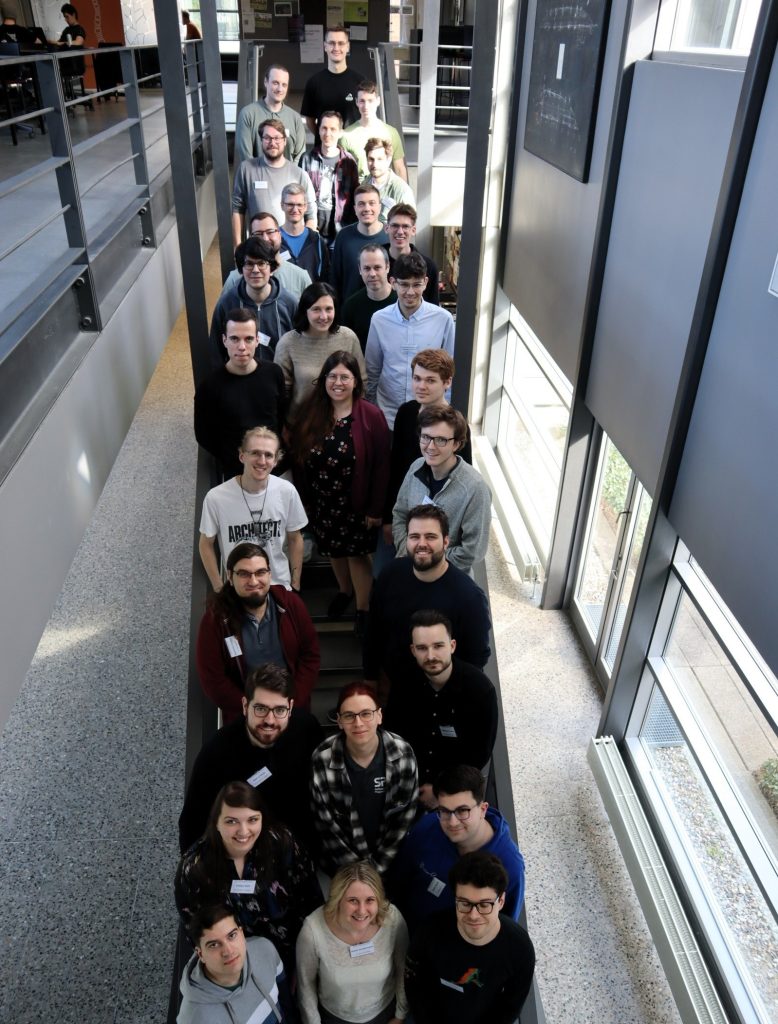
Our colleagues Francisco J. Domínguez-Mayo and Francisco S. Benítez recently participated in the Meeting on Feature-Oriented Software Development (FOSD Meeting 2026). This prominent international event took place from March 23 to 27, 2026, at the University of Southern Denmark, located in the city of Odense.
During the conference, our researchers, representing DIVERSO LAB and the University of Seville , shared the team’s latest advancements, highlighting the role of Software Product Lines (SPL) and Artificial Intelligence applied to the agricultural sector.
Systematic Innovation in Intelligent Systems
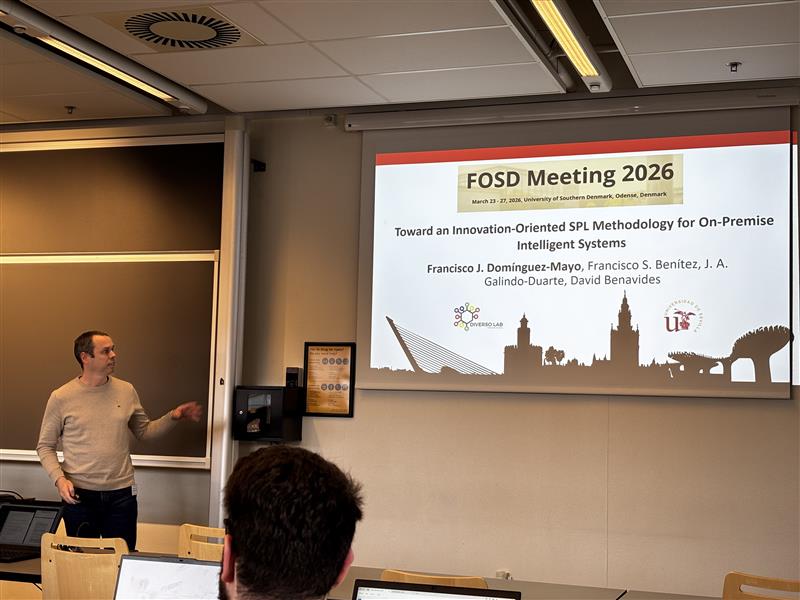
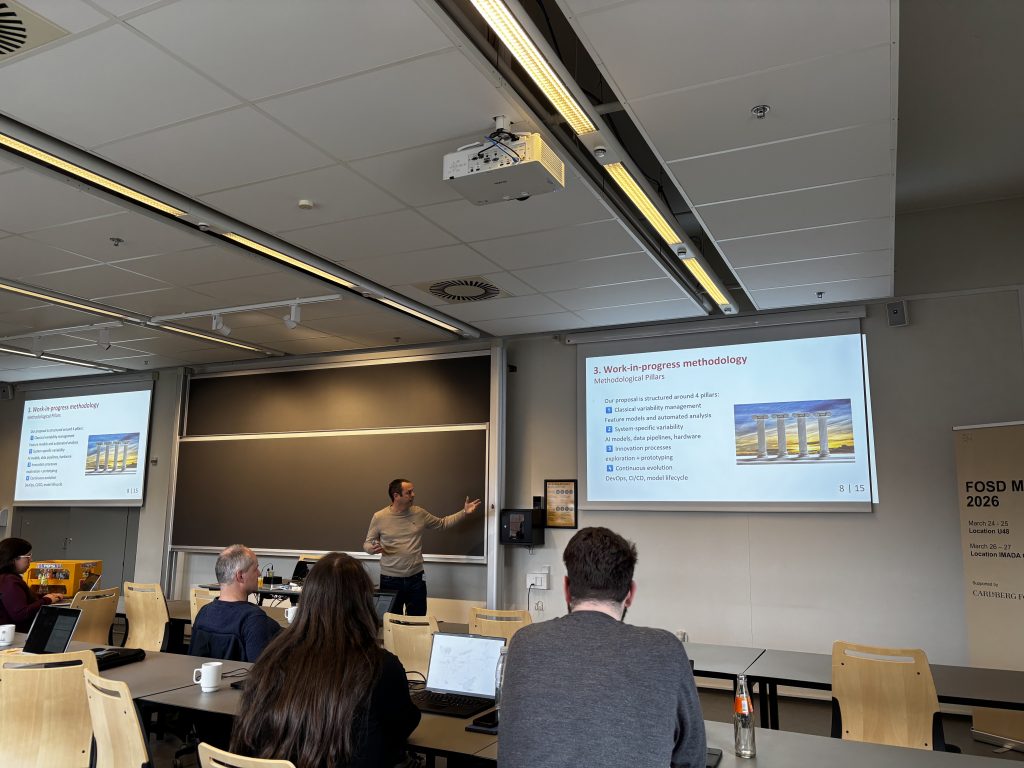
Francisco J. Domínguez-Mayo presented the paper titled “Toward an Innovation-Oriented SPL Methodology for On-Premise Intelligent Systems”. In his presentation, he outlined the need to drive innovation through systematic reuse.
The main goal of this research is to integrate innovation cycles directly into Software Product Line (SPL) methodologies. To achieve this, Domínguez-Mayo highlighted the use of smart agriculture as a real-world testbed. Since agriculture is a high-variability domain, it allows for the application of SPL techniques to reuse knowledge across multiple agricultural scenarios. The researcher showed how these methodologies are already being applied in real projects such as AquaIA and SensOlive.
AI and Dynamic Configuration through MCP
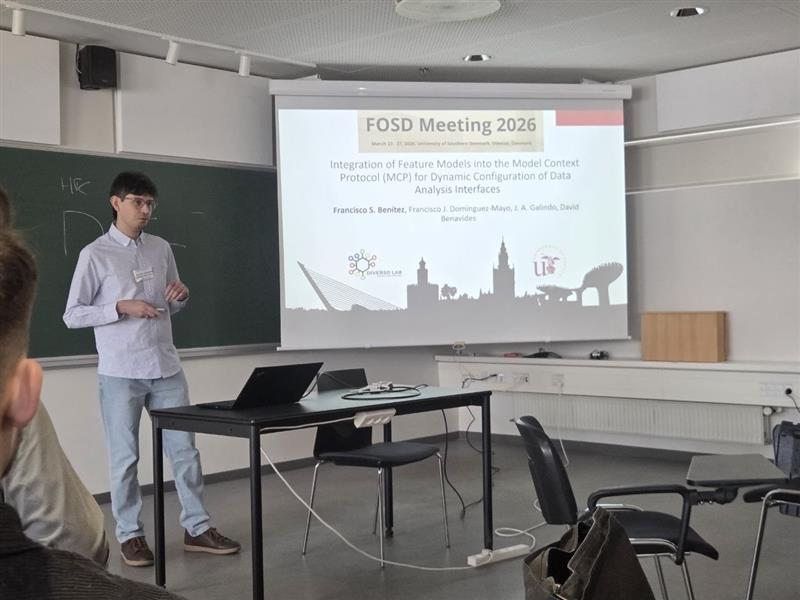
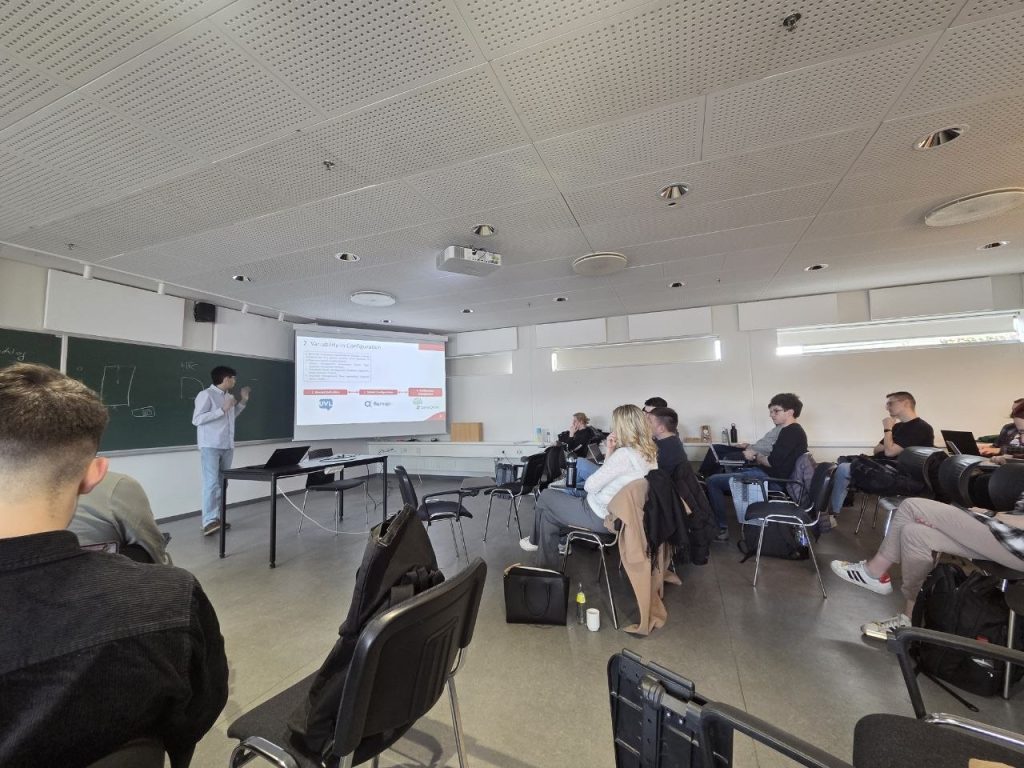
For his part, Francisco S. Benítez presented the work “Integration of Feature Models into the Model Context Protocol (MCP) for Dynamic Configuration of Data Analysis Interfaces”. His presentation focused on the Model Context Protocol (MCP), a standardized protocol created by Anthropic in late 2024 to connect Artificial Intelligence models with various tools.
Francisco illustrated the practical application of this technology within the SensOlive project, which develops a deficit irrigation system in olive groves using dendrometers and intelligent digital twins. Thanks to the integration of an MCP server into the SensOlive platform, users can interact with an AI chat interface to execute complex use cases. Through this interface, it is possible to automate irrigation, configure new digital twins, and train and validate prediction models. Additionally, Benítez explained that the configurations for each platform component are validated through AAFM operations using the flamapy tool.
We are proud to see how our team’s talent continues to cross borders, proposing solid methodologies that range from ad-hoc innovation to the systematic engineering of intelligent systems. Congratulations to Francisco J. Domínguez-Mayo, Francisco S. Benítez, and the rest of the co-authors for their excellent work!